German Unemployment
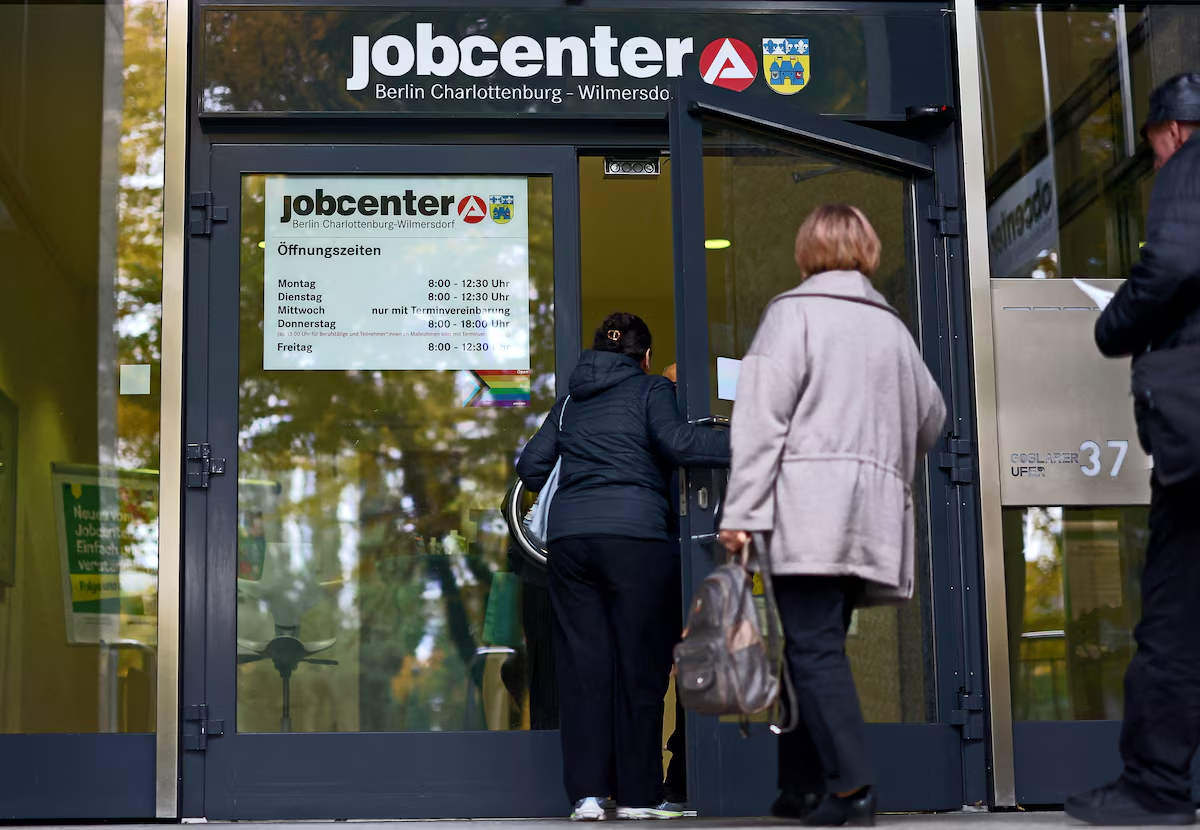
Germany’s unemployment rate reached its highest level in more than a decade in 2025, underscoring persistent weaknesses in Europe’s largest economy and signaling that the labour market will remain under pressure well into 2026.
According to figures released by the Federal Labour Office, the average number of unemployed people in Germany rose by 161,000 in 2025 to 2.948 million. This marked the highest annual unemployment figure since 2013 and reflected a year of subdued economic activity, weak industrial output, and cautious hiring by companies.
Labour office head Andrea Nahles warned that despite signs the worst may have passed, a meaningful recovery is unlikely in the near term. “Although the trough has probably been reached, a slight easing is not expected until the middle of the year at the earliest,” Nahles said. She added that 2026 would remain a difficult year for the labour market, describing it as “not a year of the all-clear, but a year with noticeable challenges.”
Germany’s economy has struggled to regain momentum following a period marked by high energy costs, slowing global demand, and tighter financial conditions. While government fiscal support measures and a potential rebound in the construction sector are expected to provide some relief, officials caution that these factors alone will not be sufficient to drive a sharp decline in unemployment.

The weak trend was evident at the end of the year. In December, the number of unemployed people rose by 3,000 on a seasonally adjusted basis compared with the previous month. Although this increase was smaller than the 5,000 rise forecast by analysts surveyed by Reuters, it still highlighted the fragile state of the labour market.
Qrcreat Online of the most striking features of the current situation is the continued shortage of skilled workers, even as overall unemployment climbs. Employers in sectors such as healthcare, engineering, information technology, and skilled trades continue to report difficulties filling vacancies. This mismatch points to structural issues within the German labour market, including demographic change, skills gaps, and limited labour mobility.

Economists say these structural challenges complicate the outlook. While cyclical improvements may stabilise employment levels, long-term solutions will require increased investment in training, education, and workforce integration. Without such measures, Germany risks facing both rising unemployment and unfilled positions simultaneously.
qrcreat Looking ahead, the labour office expects only a gradual improvement, with unemployment figures likely to remain elevated through much of 2026. Any recovery is expected to be moderate and uneven across regions and industries.
As Germany navigates slowing growth and ongoing structural pressures, the latest labour market data serves as a reminder that economic resilience alone may not be enough. Policymakers face the dual task of stimulating growth while addressing deep-rooted labour shortages — a challenge that will shape the country’s economic trajectory in the years ahead.